Stress and Poor Health:
The Never-Ending Loop
The fight-or-flight response was built for wolves. You are using it for Mondays. Here is what it is doing to your body.
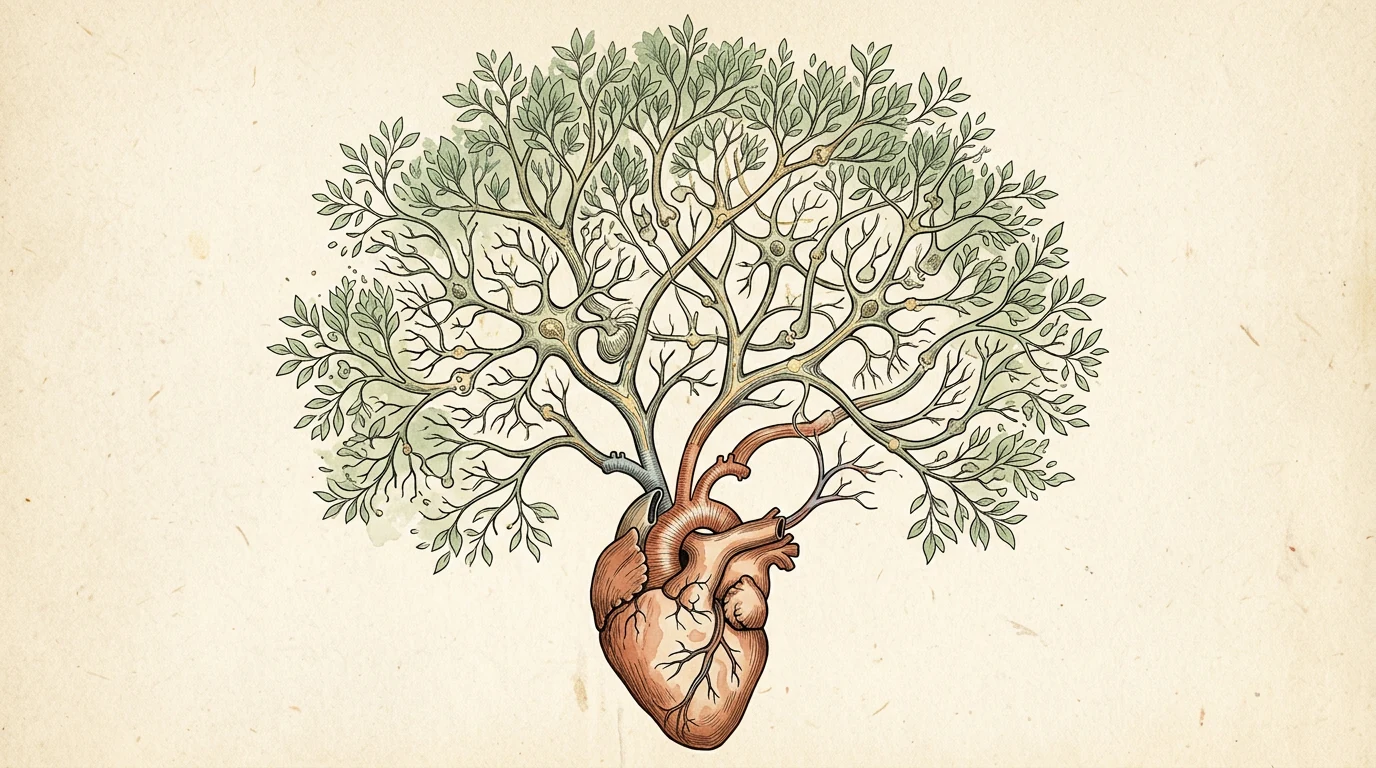
Everyone has experienced stress. Sometimes it is a positive force — the sharpness before a piano recital, the adrenaline of a consequential pitch. Sometimes it is a negative force — the traffic, the inbox, the conversation you keep rehearsing. Either way, you can feel it in both your mind and your body. Sweating palms. A racing heart. A knot in the belly. The automatic response.
This response developed in our ancestors as a mechanism to outrun predators. Faced with a wolf, the body floods itself with hormones. Heart rate climbs. Blood pressure rises. Energy rushes to the muscles that need it most. The system works brilliantly — against wolves.
Your wolves no longer appear. What appears instead is a deadline, a budget call, a child’s schedule, a commute. The body does not distinguish. The alarm fires anyway. Do this for long enough and the fight-or-flight switch gets stuck in the on position. The cost is measurable, cumulative and consequential.
Acute stress: real, rapid, rarely neutral
Even short-lived stress leaves a fingerprint. The stomach-ache before a board presentation. The knot before a first date. Larger acute stress — an argument, a disaster, a phone call — can trigger more than discomfort. Multiple studies show that sudden emotional stress, and especially sudden anger, can precipitate heart attacks, arrhythmias and sudden cardiac death. This happens mostly in people who already have heart disease. Some of them did not know they had heart disease until the acute event introduced them to it.
Stress does not only make you feel bad. In the wrong body, at the wrong moment, it can kill you.
Chronic stress: the quiet killer
Prolonged stress is more dangerous than any single event because it works slowly. You do not notice what you do not measure. Fatigue, short temper, poor concentration — these are easy to explain away. Chronic stress also causes wear-and-tear on every major system in the body, even when you feel fine.
It makes existing problems worse. One study found that roughly half of patients with chronic headaches improved significantly simply by learning to stop catastrophizing — the stress-producing habit of reflexively imagining the worst. The pain was partly the pain. The pain was partly what the mind did with the pain.
The job-strain finding
Chronic stress can also cause disease — either directly, through the continuous activation of stress pathways, or indirectly, through the coping behaviors (overeating, smoking, drinking, skipped sleep) that people adopt to dampen it. One of the most robust findings in occupational medicine is this: job strain — high demand coupled with low control — is associated with significantly elevated risk of coronary disease. It is not the workload that gets you. It is the workload without the lever.
Other forms of chronic stress behave similarly. Depression. Low social support. Isolation. All have been implicated in cardiovascular risk. And once you are sick, stress makes it harder to recover — cardiac patients with the so-called Type D personality, characterized by chronic distress and social inhibition, have measurably worse outcomes than their peers.
Breaking the loop
The loop is: stress degrades health → degraded health worsens your capacity to handle stress → which further degrades your health. The exit is not to eliminate stress — that is neither possible nor desirable. The exit is to understand the biology well enough to intervene at the switch, not at the symptom.
That is the work of the BestStressZone® framework: to stop treating stress as weather, and start treating it as weather you can read, anticipate and respond to.